 2025, Vol. 49
文章信息
- 何云霞, 张天若, 崔正国, 曲克明, 宋盈盈, 周韵, 隋金昌, 陈剑磊. 2025.
- HE Yunxia, ZHANG Tianruo, CUI Zhengguo, QU Keming, SONG Yingying, ZHOU Yun, SUI Jinchang, CHEN Jianlei. 2025.
- 海水与水产品中氯霉素分析检测技术研究进展
- Research progress on the analysis and detection technology of chloramphenicol in seawater and aquatic products
- 海洋科学, 49(8): 84-96
- Marine Sciences, 49(8): 84-96.
- http://dx.doi.org/10.11759/hykx20250222001
-
文章历史
- 收稿日期:2025-02-22
- 修回日期:2025-04-15


2. 大连海洋大学 水产与生命学院, 辽宁 大连 116023;
3. 天津农学院 水产学院, 天津 300392
2. College of Fisheries and Life Science, Dalian Ocean University, Dalian 116023, China;
3. Marine Products Institute, Tianjin Agricultural College, Tianjin 300392, China
氯霉素(Chloramphenicol, CAP), 也被称为氯胺苯醇, 是一种由氯链丝菌生成的广谱抗生素, 具有抑制细菌增长的能力, 并能有效地治疗革兰氏阳性菌和革兰氏阴性菌(例如伤寒杆菌以及其他沙门氏菌等)引起的感染, 在一定程度上也可以促进动物生长, 被广泛应用于人类生产生活中[1-4]。而生产生活中产生的氯霉素残留物会通过制药废水、生活废水、医院废水、养殖污水等途径持续流入水体, 最终汇聚于海洋。残留的氯霉素会通过食物链在人体内积累, 对水产品安全及人体健康造成威胁。近年来, 氯霉素导致的毒副问题凸显, 尤其是在海洋环境及水产品中的残留问题仍然突出, 相关研究表明CAP会对人类造成严重伤害, 如再生障碍性贫血、灰婴综合征、神经毒性反应、粒细胞缺乏症、超敏反应等[5], 还可能对人体的肝脏和肾脏造成损害, 导致骨髓抑制等副作用, 严重时可能引发癌症。因此, 氯霉素在水产品中的残留问题备受关注, 许多国家严格控制或禁止其在养殖中使用, 欧洲食品安全局规定食品中氯霉素的最大含量不得超过0.3 μg/kg, 根据我国的规定, 动物源性食品中不允许检测到氯霉素残留。CAP因其显著的抗菌效能及相对低廉的价格, 在养殖业中仍有使用现象发生, 引发了动物源性食品中CAP残留检测的频繁检出。因此对CAP残留的灵敏、准确检测尤为必要[6]。
目前, 许多研究报道了CAP的检测方法, 如Barreto等[7]建立了一种高效液相色谱-电喷雾电离-串联质谱仪确证了鱼和对虾中CAP的方法; Hu等[8]研制了一种新颖的磁弛豫开关传感器, 用于鱼类样品中氯霉素的快速检测; Lochab等[9]通过电化学方法, 构建了传感器用于真实水样中CAP的检测; 郭秀丽等[10]通过酶联免疫吸附法来检测CAP, 创建了用于间接竞争ELISA检测CAP的技术手段等。而对于一些复杂环境样品, 通常需要对样品进行前处理, 通过提取、净化和浓缩等步骤去除基质中的干扰物质, 确保后续仪器检测的准确性和可靠性。
由于海水和生物体样本的基质复杂, 海洋环境的高盐度与复杂流体动力学会减缓氯霉素的降解, 使其半衰期显著长于淡水环境, 并且基质效应会严重干扰抗生素检测的准确性, 直接进行检测存在较大困难, 当前针对海水环境和水产品中CAP的样品前处理与分离检测方法的研究尚不够系统和完善。本研究归纳总结了海水和水产品中氯霉素样品的前处理和检测方法, 探讨了海水环境中CAP的萃取和分离富集方法, 比较分析了固相萃取和液液萃取等检测方法的原理和优化条件, 探讨了多种仪器分析方法用于检测CAP的可行性和准确性。最后, 本文展望了CAP样品前处理和检测技术的未来发展方向。
1 CAP的理化性质及污染特性 1.1 CAP的理化性质氯霉素(Chloramphenicol, CAP)是一种常见的广谱抗生素, 其化学名称为1R, 2-(-)-1-对硝基苯基-2-二氯乙酰胺基-1, 3-丙二醇, 其性质极为稳定, 不易分解[11-12], 对革兰氏阴性菌和革兰氏阳性菌都有较好的杀菌作用, 可用于相关的动物疾病[13]。CAP最早在委内瑞拉链丝菌的培养液中提取所得[14], 其分子中存在两个不对称碳原子(C-1和C-2), 因此CAP有4种光学异构体(图 1), 只有左旋异构体具备抗菌活性。
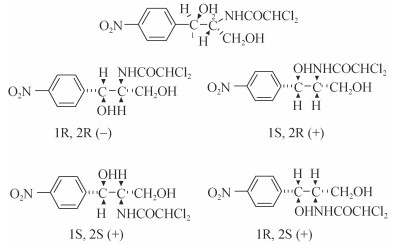 |
| 图 1 氯霉素结构 Fig. 1 Chloramphenicol structure |
近海水域受到人类活动的影响, 残留的抗生素通过各种方式进入海洋环境, 进一步通过食物链进入生物体和人体, 影响海洋生态平衡和人类健康[15]。在我国大连近海水体中采集的20个水样中, 有6个水样中发现了氯霉素的残留, 检出氯霉素最大质量浓度为1.14 ng/L[16]。从福建省9地市采集养殖水样本155份, 其中有31份检出有氯霉素, 检出率为20%, 最大质量浓度为0.034 μg/L[17]。从深圳的水域中取样, 测得氯霉素含量的平均值为2.7 ng/L, 检出率为51.9%, 最大质量浓度为8.2 ng/L[18]。对深圳市南部水产品样品(均为本地产品, 不含出口产品)采用LC-MS/MS联用法进行了贝类、虾类和鱼类样品的氯霉素含量检测, 贝类、虾类以及鱼类中CAP的检出率分别为37.2% (64/172)、13.6%(3/22)和16.5% (16/97)[19], 贝类中CAP的检出率相对偏高, 更多海水和水产品中氯霉素的检出情况详见表 1。因此, 检测抗生素药物残留对确保食品安全和降低人类健康风险十分重要。
样品前处理技术主要包括样品的预处理、分离富集等步骤, 对提高检测灵敏度和选择性至关重要。海水环境中的CAP含量较低, 并且海水基质以及生物体的成分复杂, 基质效应干扰大, 对海水和生物体的样品进行前处理, 以降低或去除样品中杂质对CAP检测的干扰十分必要。
2.1 环境样品的预处理 2.1.1 水体样品海水样品的预处理涉及多个步骤, 如过滤、添加螯合剂(乙二胺四乙酸, EDTA)和pH调节等(图 2)。首先, 采集的海水样品需经过0.45 μm过滤器进行初步过滤, 以去除较大的固体颗粒和水中的悬浮颗粒, 以减少分析过程中颗粒物的干扰; 再通过0.22 μm过滤器进行二次过滤, 去除样品中的细菌。过滤后再加入EDTA作为螯合剂, EDTA可以和海水中存在Mg2+、Ca2+、Fe2+等二价金属离子形成稳定的络合物, 直接减少样品中金属离子对CAP的萃取和分析检测的影响。最后, pH调节是水体样品预处理中的关键步骤[24-25]。CAP在中性、pH为5.5~7的弱酸性环境中, 稳定性相对较好; 在强碱性的环境中, CAP结构里的酰胺键可能会经历水解过程; 在强酸性环境中, CAP结构中的碳-氯键会发生水解反应, 生成物质对硝基苯基-2-氨基-1, 3-丙二醇。一般情况下, 通过添加硫酸、盐酸或者酸性缓冲溶液来调节海水pH至6, 这样可以提高CAP的回收率(表 2)。
 |
| 图 2 水环境样品中CAP样品前处理和检测的主要流程 Fig. 2 Main pretreatment process and detection of CAP samples in water environment samples |
水生生物体样品由于蛋白质和脂肪等物质含量较高, 容易影响目标物的回收率, 因此其样品前处理步骤复杂, 主要包括样品均质化、加入内标、加入有机溶剂、加入EDTA、调节pH、机械振荡或超声处理、离心取上清液等(图 2)。水生生物体CAP样品的前处理和检测方法详见表 3。
在对原始的海水样品或水生生物样品进行初步的预处理后, 需进一步通过分离和富集以提升后续检测的灵敏度和选择性。样品的分离与富集是将目标物从复杂体系中提取出来, 同时去除对测定有干扰的成分, 以避免它们在后续的目标分析和定量过程中造成误差。然后可以把微量或痕量的目标物富集, 达到足够浓度的目标物, 以满足仪器检测限制要求, 实现精准定量分析。海水环境中CAP的分离富集方法主要包括液液萃取(Liquid-liquid extraction, LLE)、固相萃取(Solid-phase extraction, SPE)和QuEChERS(quick, easy, cheap, effective, rugged and safe)萃取等(表 4)。
| 方法 | 优点 | 缺点 |
| LLE | 无需特殊装置 | 操作复杂, 耗时长且因使用大量有机溶剂而导致环境污染, 并且难以从水中提取高水溶性物质。 |
| DLLME | 富集效率高、操作简单、快速、成本低 | 应用具有局限性 |
| SPE | 使用溶剂少, 应用广泛, 技术成熟 | 小柱成本高, 操作复杂 |
| MSPE | 省时、节能、简便 | 离心耗时长、成本高 |
| DSPE | 样品处理时间短、短时间内分析更多样品、具有简单性、适用性 | 应用少 |
| MSPD | 具有可行性、灵活性、多功能性、低成本和快速性 | 粒径太小流速慢; 粒径太大表面积太小, 吸附能力减弱 |
| MISPE | 特异识别性、广泛实用性, 简单快速 | 能够作为单体的化合物有局限性 |
液-液萃取(LLE)可被定义为一种化学过程, 将一种溶解物质从一种液相有效地转移到另一种不相溶或部分互溶的液相中。通常情况下, 一个相是水或缓冲溶液, 另一个相则是非极性有机溶剂[31, 42]。由于其无需特殊装置、设备比较简单等明显优点, 已广泛应用于环境、食品等领域和生物学分析。虽然LLE的优点很多, 我们也不能忽视其存在的不足之处, 比如操作繁琐、耗时长、需要使用大量有机溶剂导致成本高和环境污染等问题。相较于LLE技术, 液液微萃取(Liquid-liquid microextraction, LLME)展现出显著优势, 其特征包括样品消耗减少、提取效能优良及富集水平高[43]。通常, 水样中CAP的简易快速的微萃取技术主要采用分散液-液微萃取(Dispersive liquid-liquid microextraction, DLLME)的方法[32-33, 44]。DLLME利用少量有机溶剂形成的小液滴, 与样品中的目标分子发生相互作用, 从而实现目标物的分离和富集。使用超声波辅助DLLME可以促进分散过程, 提升提取效率并减少提取所需时间。由于DLLME的高效性、选择性、简便性、环保性以及适用性, 该方法广泛应用于CAP的分离富集。2016年, Guan等[32]建立了超声辅助分散液-液微萃取(DLLME)-超高效液相串联质谱(UHPLC-MS/MS)测定CAP药物的分析方法, 是以二氯甲烷(800 μL)和甲醇/乙腈(1∶1, v/v, 1 200 μL)为萃取剂和分散溶剂, 采用超声辅助DLLME法对CAP进行萃取, 在最佳条件下, 在1~200 ng/mL的范围内表现出非常好的线性, 检测限是0.006~0.091 ng/mL, 相对回收率在76.77% ~ 99.97%之间, 相对标准偏差为1.6% ~ 8.8%。该方法具有良好的灵敏度和精确度。
2.2.2 固相萃取(SPE)固相萃取技术(Solid-phase extraction, SPE), 是一项在20世纪70年代早期被确认的高效的样本纯化方法, 其基于固相和液相之间不同的亲和力, 原理和液相色谱法的分离相似[45]。该方法应用广泛且效果显著, 主要应用于样本的分离、纯化与富集过程。但是这种方法也具有许多的缺点, 包括成本高、操作复杂、药筒堵塞、耗时、依赖于泵的使用、颗粒聚集导致的有限的提取效率以及不能处理高样品量[46]。近年来, 人们一直关注和使用新的SPE技术来解决上述问题。为此, 许多科研人员开发了不同的SPE模式, 包括磁性固相萃取[47]、分散固相萃取[48]、基质固相分散[49]等。刘奕熊等[50]用固相萃取柱测定暂养水样中氯霉素的含量, 收集了82批次暂养水, 检测到药物残留的样品有21批, 总检出率为25.6%, 其中氯霉素检出量为0.043 ~ 26.0 μg/L。固相萃取技术优化了分析物回收率, 同时简化了样品预处理步骤。该技术可以有效消除内源性化合物干扰, 从而获得较高浓度和纯度的CAP。
2.2.3 分散固相萃取(DSPE)分散固相萃取(Dispersive solid-phase extraction, DSPE)通常应用于QuEChERS方法, 是一种快速(Quick)、容易(Easy)、经济(Cheap)、有效(Effective)、稳定(Rugged)和安全(Safe)的样品前处理技术, 通常运用于检测环境中药物残留的分析实践。它的工作原理与固相萃取相似, 都是依靠吸附剂填料对基质中杂质的吸附能力, 以实现分离和去除杂质的目的。但是与传统的SPE相比, DSPE是将水溶性提取液(如乙腈)与精确称量好的分散SPE填料、高含量盐和缓冲试剂相混合, 振荡离心, 之后上清液便可直接用于下游分析, 而且分散SPE不需要使用大量的溶剂, 减少了样品处理时间, 在较短的时间内可以分析更多的样品, 操作更为简便, 因此被广泛应用于分析检测中[51]。Lesan等[52]研究开发了一种在高效液相色谱分析之前同时测定蜂蜜样品中氯霉素和氟苯尼考残留的分析方法, 该方法在DSPE技术中使用NH2-UiO-66 MOF作为吸附剂, 磁性离子液体(MIL)用作洗脱溶剂, 使用LC二极管阵列检测器(DAD), 实现了氯霉素和氟苯尼考的高富集因子(EF)和低检测限(分别为0.19 ng/g和0.44 ng/g), 回收率分别为81%和74%。
2.2.4 基质固相分散(MSPD)基质固相分散(Matrix solid-phase dispersion, MSPD), 这一技术由Barker等于1989年引入, 专为动物组织中药物残留的高效提取[53]。这项技术的基本原理是将含有C18和其他多种聚合物的固相萃取材料与样本进行混合, 然后经过精细研磨, 制成半干燥的混合物, 并将其用作色谱柱的填充材料。随后, 采用一系列不同溶剂对柱子进行淋洗, 以实现目标化合物的分离与洗脱。MSPD成功的关键因素可能是其可行性、灵活性、多功能性、低成本和快速性。此外, 使用MSPD可以在一个步骤中对少量样品等分试样进行提取和清洁。MSPD一般在室温和大气压下操作[54], 一些应用中也在极端条件下与加压液体萃取结合使用[55]。陈晓燕等[35]使用了基质分散固相萃取-高效液相色谱-可变波长检测法。首先, 使用了0.5%的乙酸乙腈溶液从新鲜牛奶中提取了8种抗生素, 接着使用C18粉末和PSA粉末进行了纯化处理。随后将分离出的抗生素用甲醇溶解后直接进样测定。通过对色谱条件和提取技术等核心参数的优化, 在12 min内同步检测了包括氯霉素在内的8种抗生素, 极大地提高了分析的速度和精确度。
2.2.5 分子印迹固相萃取(MISPE)分子印迹固相萃取(Molecularly imprinted solid- phase extraction, MISPE)是一种使用分子印迹聚合物作为吸附剂的固相萃取技术, 通过将分子印迹聚合物与固相萃取技术相融合, 能够显著提高固相萃取的效率和选择性[56-57]。与传统的非分子印迹固相萃取方法相比, MISPE能够更快速、更精准地从复杂基质中分离目标化合物。它的优势在于分子印迹聚合物能够特异性识别目标分子, 显著提高萃取过程的效率和速度。
分子印迹聚合物是由模板、单体和交联剂组合成的复合物在三维聚合物网络中形成构象而制备的人工聚合物。这种聚合物由于其结合部位在形态、尺寸和官能团的位置上与模板形成互补, 从而在目标分子上展现出了显著的选择性和亲和性[58-64]。由于分子印迹聚合物具有稳定、成本低的特点, MISPE已被应用于开发选择性的样品预处理方法。Li等[65]采用氯霉素作为模板分子, 成功制备了具有不同甲基丙烯酸和丙烯酰胺比例的分子印迹聚合物(MIPs), 并利用傅里叶变换红外光谱、扫描电子显微镜以及振动样品磁强计对其进行了深入的特性分析, 考察了影响分子印迹性能的各种因素以及该材料在实际应用时可能遇到的问题, 成功地研发了一种采用MIPs作为固相萃取(SPE)吸附介质, 从食物中高效且简便地提取氯霉素的分析技术。
3 仪器分析方法 3.1 高效液相色谱高效液相色谱法(HPLC)被广泛应用于测定水产品中的CAP残留物, 是仪器分析中最常用的方法之一。高效液相色谱技术展现出“四高一广”的显著优势(表 5), 包括高压、高速、高效、高灵敏度检测以及广泛的应用领域。此外, 该技术具备色谱柱可循环利用的特性, 在一定程度上降低了分析成本, 且在分析过程中样品不易遭受破坏, 残留物易于回收, 进一步提升了其在样品分析领域的经济性和实用性。因此, 该方法在众多学术领域内已成为重要的分离分析技术, 其应用价值显著[29], 特别是在评估兽药污染的影响方面, 具有极其关键的作用。黄志勇等[66]采用高效液相色谱法检测几种常见养殖水产品中CAP的残留, 在50~1 000 μg/mL范围内线性关系良好, 其检出限为0.014 μg/g。Di等[36]采用高效液相色谱-紫外线检测方法对水样进行CAP的残留检测, 在0.5~50 ng/mL范围内线性关系良好, 其检出限为0.1 ng/mL。Tyrpenou等[29]采用高效液相色谱法检测了养殖金头鲷肌肉中CAP的残留, 其检测限为1.87 ng/L, 相当于肌肉中5 μg/kg CAP。现今, 液相色谱法的理论体系已较为完善, 然而在实际应用中对样品预处理步骤提出了严格要求, 且其固有的灵敏度和分离效能相对有限, 通常需要结合液相色谱-串联质谱技术以实现结果的精确验证。
| 方法 | 优点 | 缺点 |
| HPLC | 高压、高速、高效、高灵敏度检测, 应用领域广泛, 降低分析成本, 样品不易破坏, 残留物易回收 | 样品预处理步骤要求严格, 固有的灵敏度和分离效能相对有限, 需要结合液相色谱-串联质谱技术以实现结果的精确验证 |
| HPLC-MS/MS | 高灵敏度和精确度, 检测限更低, 高度自动化 | 样品前处理复杂, 仪器维护成本高, 操作要求高, 相比于超高液相色谱分析时间长 |
| GIGA | 操作便捷、检测周期短、成本经济、高灵敏 | 通量低, 痕量目标物检测能力弱, 稳定性差 |
| ELISA | 高灵敏度, 低检测限, 特异性好 | 操作繁琐, 样本预处理要求高, 检测指标单一 |
| EC | 响应快、灵敏度高、操作简单、成本低 | 易受外界环境影响 |
随着检测技术的提高, 高效液相色谱-质谱法(HPLC-MS/MS)已成为测定水产品中CAP残留的重要方法, 其凭借高灵敏度和精确度, 显著提升了分析效率与准确性, 成为测定水产品中CAP残留的有效手段。相比于高效液相色谱技术, 液相色谱-串联质谱展现出显著的分离效能优势, 同时具备检测限更低、分析时间更短以及高度自动化的特性。Ye等[67]通过高效液相色谱-质谱法测定水产品中CAP、甲砜霉素(TAP)、氟苯尼考(FF)和氯霉素胺(FFA)等抗生素残留量, 结果表明, 测定的这几种抗生素具有良好的线性关系, 具有宽而低的0.01~5 μg/L的检测基质范围以及0.01 μg/kg的低检出限。刘少颖等[68]采用高效液相色谱-串联质谱技术对淡水鱼类中的喹诺酮和氯霉素残留进行了定量分析, 在0.1~200 ng/mL质量浓度内线性系数大于0.99, 定量限为0.02~0.49 μg/kg, 检出限为0.01~0.15 μg/kg。Huang等[69]采用高效液相色谱-串联质谱技术对鱼类样本中包括氯霉素在内的6种抗菌药物进行了残留量的测定, 目标物展现出显著的线性响应关系, 相对标准偏差低于6.3%, 检测限和定量限分别为4.54 ~101.3 pg/kg和18.02~349.1 pg/kg, 这表明方法的准确性和精密度均达到较高标准。根据多位学者的研究成果, 高效液相色谱-串联质谱技术在检测灵敏度、线性动态范围以及应用灵活性方面均实现了显著的进展, 特别适用于水产品中氯霉素的微量检测与全面分析。
3.3 胶体金免疫层析法胶体金免疫层析法(GIGA)是一种高效快速的检测技术, 基于抗体与抗原在检测线和质控线上的特异性结合, 通过在胶体金反应区域形成沉淀来显现颜色。Zhou等[37]通过胶体金免疫层析技术实现了对水产品中氯霉素残留的高效检测, 该方法在标准溶液中的最低检测限为0.5 μg/mL, 在鱼肉中的最低检测限为0.5 μg/kg。丘韶麟等[70]研究采用胶体金免疫层析法对市场流通的水产品进行了氯霉素代谢物的检测, 结果显示阳性检出率超过1.0%。宋安华等[71]运用胶体金免疫层析技术对市场流通的水产品进行了快速检测, 氯霉素的整体不合格率为1.67%。由此可见, 该方法特别适用于大规模样本的快速检测与市场抽样检查, 其优势在于操作便捷、检测周期短、成本低、灵敏度高[72-73]。
3.4 酶联免疫吸附法酶联免疫吸附测定(ELISA)是酶免疫测定技术中最常用的方法之一, 其基本原理是将抗原与抗体之间的特异性免疫反应与酶的高效催化作用相结合, 从而实现对目标生物分子的定量分析检测。这一技术的起源可追溯至1971年, Engvall等[74]合作研发了这项技术, 他们首次采用带有碱性磷酸酶标记的免疫球蛋白G(IgG)来进行IgG的精确测量, 标志了ELISA技术诞生。张彪等[75]利用酶联免疫吸附法对水产品中的氯霉素残留进行了定量分析。该方法基于间接竞争酶联免疫分析技术, 具有较高的灵敏度(4.88 μg/mL)和较低的检测限(0.29 μg/mL), 回收率范围为83.90%~100.73%, 与液相色谱-串联质谱法(LC-MS/MS)的结果高度一致, 且该方法对氯霉素结构类似物及其他抗生素的交叉反应率低于0.1%, 表现出良好的特异性。区兑鹏等[76]也采用酶联免疫吸附法对水产品中氯霉素等药物残留进行了检测。研究结果表明, 氯霉素等药物的线性相关系数均大于0.995, 加标回收率在60%至144%的范围内, 而相对标准偏差则在0至7.5%之间。
3.5 电化学传感器法电化学传感器(EC)是一种用检测目标物质在电极表面的电化学反应来测量其浓度或存在的装置。其工作原理是在电极表面发生氧化还原反应, 通过测量反应产生的电信号来推断目标物质的浓度。传感器由工作电极、对电极、参比电极三个部分组成, 其优点主要是响应快、灵敏度高、操作简单、成本低。当然, 也存在着受温度、湿度、干扰物质影响的缺点, 需要定期校准。
电化学传感器的性能依赖于传感材料, 传感材料能增加电极的比表面积, 增大传感器的电流响应, 提高灵敏度。所以研发适配且有效的传感材料对于成功制作传感器、检测待测物至关重要。史转转等[38]以金黄色葡萄球菌为模板在其表面原位生长CoNi-MOF, 调控碳化温度, 得到了催化活性位点多的CoNi氮掺杂碳纳米球(CoNi/CN-900)传感材料, 进一步用CoNi/CN-900成功构建了CAP电化学传感器, 结果显示, 此传感器检测CAP的检测限低至6.6 nmol/L, 灵敏度高达8.75 μA·μmol·L–1·cm–2。宋心怡等[77]利用多壁碳纳米管与金、铂纳米粒子对电极进行双敏化处理, 增强电化学传感器的电流响应值, 以邻苯二胺为模板, CAP为单体, 循环伏安法进行电化学聚合来合成分子印迹膜, 而后将单体洗脱, 制作出了CAP的分子印迹电化学传感器。检测结果显示, 传感器在氯霉素浓度为0.66~56.66 µg/L之间呈现出良好的线性关系, 检出限为0.45 nmol/L(0.146 µg/L), 且该传感器对CAP有很高的特异性, 对于检测CAP展现出了较高的灵敏度及较低的检测限, 而且具有成本低, 材料环保等优点, 为未来检测环境污染物的新型电化学传感器的研究提供了新的思路和方向。
4 研究展望海水和水产品中氯霉素的残留问题已受到广泛关注, 开发快速灵敏、准确度高的分析检测方法有助于及时了解海水和水产品中氯霉素的残留状况, 为保障水产品安全和人类健康提供技术支撑。近些年, 学者们通过对水产品中氯霉素的样品前处理和检测方法进行诸多研究, 使得氯霉素的检测技术不断成熟发展, 例如SPE因高度的选择性、出色的回收效率、出色的重复性、低廉的成本以及自动化的特点, 在水产品中氯霉素的分离、纯化和富集方面得到了广泛的应用。最常用的检测技术仍然以HPLC-MS/MS分析方法为主, 而以胶体金免疫层析法和酶联免疫吸附法为代表的检测技术, 也在快速分离和现场检测方面展现了良好的应用前景, 相关研究成果在提高氯霉素检测的效率、回收率和灵敏度方面都有突出贡献。
考虑到现有检测技术的限制, 以及对海水及水产品中氯霉素检测技术灵敏便携、精准度高的需求, 复杂环境基质中氯霉素的检测方法开发与优化仍存在巨大挑战。对于氯霉素残留检测的研究重点可以关注以下几点: (1)开发更为简单的检测方法, 目前使用的分析仪器操作复杂, 成本较高。未来还需要简单、快速灵敏、成本低的简单的分析方法, 比如新型传感技术与便捷式检测设备。(2)实现分离检测的自动化, 可以更好的对检测进行监管, 如自动化检测平台和区块链与物联网技术。(3)建设多技术融合与标准化体系, 使用多技术联用提升准确性。(4)发展绿色检测和可持续检测, 减少有机溶剂的使用, 使用可降解检测材料, 避免二次污染。
| [1] |
ZHONG D, ZHANG J N, HUANG J Y, et al. Accelerated electron transfer process via MOF-derived FeCo/C for enhanced degradation of antibiotic contaminants towards heterogeneous electro-Fenton system[J]. Chemosphere, 2023, 335: 138994. DOI:10.1016/j.chemosphere.2023.138994 |
| [2] |
ZHANG L, YIN M, WEI X X, et al. Synthesis of rGO@PDA@AuNPs for an effective electrochemical chloramphenicol sensor[J]. Diamond and Related Materials, 2022, 128: 109311. DOI:10.1016/j.diamond.2022.109311 |
| [3] |
OU P P, WU J W, LIN Y, et al. Flexible photoelectrochemical sensor for highly sensitive chloramphenicol detection based on M-TiO2-CdTe QDs/CdS QDs composite[J]. Analytical and Bioanalytical Chemistry, 2022, 414: 2065-2078. DOI:10.1007/s00216-021-03840-4 |
| [4] |
LIU W L, LEE R J, LEE M R. Supercritical fluid extraction in situ derivatization for simultaneous determination of chloramphenicol, florfenicol and thiamphenicol in shrimp[J]. Food Chemistry, 2010, 121(3): 797-802. DOI:10.1016/j.foodchem.2009.12.087 |
| [5] |
GENG L J, HUANG J C, ZHAI H G, et al. Molecularly imprinted electrochemical sensor based on multi-walled carbon nanotubes for specific recognition and determination of chloramphenicol in milk[J]. Microchemical Journal, 2022, 182: 107887. DOI:10.1016/j.microc.2022.107887 |
| [6] |
黄象金, 利健文, 韦寿莲, 等. 氯霉素分子印迹电化学传感器的制备与应用[J]. 分析测试学报, 2023, 40(9): 1334-1341. HUANG Xiangjin, LI Jianwen, WEI Shoulian, et al. Preparation and application of chloramphenicol molecular imprinted electrochemical sensor[J]. Journal of Analytical Testing, 2023, 40(9): 1334-1341. |
| [7] |
BARRETO F, RIBEIRO C, HOFF R B, et al. Determination and confirmation of chloramphenicol in honey, fish and prawns by liquid chromatography–tandem mass spectrometry with minimum sample preparation: validation according to 2002/657/EC Directive[J]. Food Additives & Contaminants: PartA, 2012, 29(4): 550-558. |
| [8] |
HU X B, ZHAO J P, CHENG X R, et al. Polydopamine- mediated quantity-based magnetic relaxation sensing for the rapid and sensitive detection of chloramphenicol in fish samples[J]. Food Research International, 2022, 162: 111919. DOI:10.1016/j.foodres.2022.111919 |
| [9] |
LOCHAB A, JINDAL K, CHOWDHURI A, et al. Conductive polymer based MWCNTs nanocomposite as electrochemical sensing platform to detect chloramphenicol[J]. Synthetic Metals, 2023, 297: 117397. DOI:10.1016/j.synthmet.2023.117397 |
| [10] |
郭秀丽, 赵丽花, 庞永宏, 等. 氯霉素间接竞争ELISA检测方法的建立[J]. 河南科技学院学报(自然科学版), 2020, 48(3): 22-26. GUO Xiuli, ZHAO Lihua, PANG Yonghong, et al. Establishment of indirect competitive ELISA detection method for chloramphenicol[J]. Journal of Henan University of Science and Technology (Natural Science Edition), 2020, 48(3): 22-26. |
| [11] |
王秀, 杨新立, 孟勇. 氯霉素在畜禽体内残留问题的研究进展[J]. 江西饲料, 2011(2): 5-7, 9. WANG Xiu, YANG Xinli, MENG Yong. Research progress on residual chloramphenicol in livestock and poultry[J]. Jiangxi Feed, 2011(2): 5-7, 9. |
| [12] |
叶江雷, 林功师, 林楠, 等. 水产品中孔雀石绿、硝基呋喃、氯霉素残留免疫胶体金前处理过程的探讨[J]. 渔业研究, 2021, 43(1): 73-79. YE Jianglei, LIN Gongshi, LIN Nan, et al. Exploration of immunocolloidal gold pre treatment process for malachite green, nitrofuran, and chloramphenicol residues in aquatic products[J]. Fisheries Research, 2021, 43(1): 73-79. |
| [13] |
贺亚如, 侯磊磊, 米林锋, 等. 食用农产品中兽药残留的危害及控制[J]. 现代食品, 2023, 29(11): 113-115. HE Yaru, HOU Leilei, MI Linfeng, et al. The hazards and control of veterinary drug residues in edible agricultural products[J]. Modern Food, 2023, 29(11): 113-115. |
| [14] |
曹巧玲, 杨凯, 武泽新. 氯霉素的毒性作用和检测方法研究进展[J]. 职业与健康, 2013, 29(16): 2095-2097. CAO Qiaoling, YANG Kai, WU Zexin. Research progress on the toxic effects and detection methods of chloramphenicol[J]. Occupational and Health, 2013, 29(16): 2095-2097. |
| [15] |
曾若菡. 海南省东南部潟湖养殖区抗生素抗性基因的分布特征及微生物群落多样性研究[D]. 海口: 海南大学, 2021. ZENG Ruohan. Distribution characteristics of antibiotic resistance genes and microbial community diversity in the southeastern lagoon aquaculture area of Hainan province[D]. Haikou: Hainan University, 2021. |
| [16] |
NA G S, FANG X D, CAI Y Q, et al. Occurrence, distribution, and bioaccumulation of antibiotics in coastal environment of Dalian, China[J]. Marine Pollution Bulletin, 2013, 69(1/2): 233-237. |
| [17] |
邱文倩, 林坚, 华永有. 水产养殖水环境氯霉素污染状况研究[J]. 中国公共卫生, 2019, 35(2): 246-249. QIU Wenqian, LIN Jian, HUA Yongyou. Research on chloramphenicol pollution in aquaculture water environment[J]. China Public Health, 2019, 35(2): 246-249. |
| [18] |
李可, 李学云, 丘汾, 等. 深圳主要水体中20种抗生素药物分布特征[J]. 环境卫生学杂志, 2019, 9(5): 455-461. LI Ke, LI Xueyun, QIU Fen, et al. Distribution characteristics of 20 antibiotics in major water bodies in Shenzhen[J]. Journal of Environmental Health, 2019, 9(5): 455-461. |
| [19] |
LUO L, LU S Y, HUANG C P, et al. A survey of chloramphenicol residues in aquatic products of Shenzhen, South China[J]. Food Additives & Contaminants: Part A, 2021, 38(6): 914-921. |
| [20] |
王伟华. 松花江流域哈尔滨段典型抗生素的归趋及风险政价[D]. 哈尔滨: 东北林业大学, 2018. WANG Weihua. The fate and risk price of typical antibiotics in the Harbin section of the Songhua River basin[D]. Harbin: Northeast Forestry University, 2018. |
| [21] |
PALANIYAPPAN V, NAGALINGAM A K, RANGANATHAN H P, et al. Antibiotics in South Indian coastal sea and farmed prawns (Penaeus monodon)[J]. Food Additives & Contaminants: Part B, 2013, 6(3): 196-199. |
| [22] |
XIE H W, HAO H S, XU N, et al. Pharmaceuticals and personal care products in water, sediments, aquatic organisms, and fish feeds in the Pearl River Delta: Occurrence, distribution, potential sources, and health risk assessment[J]. Science of the Total Environment, 2019, 659: 230-239. DOI:10.1016/j.scitotenv.2018.12.222 |
| [23] |
胡莹莹, 叶赛, 李爱, 等. 高效液相色谱法分析海水中的氯霉素[J]. 环境化学, 2005, 24(4): 481-482. HU Yingying, YE Sai, LI Ai, et al. Analysis of chloramphenicol in seawater by high performance liquid chromatography[J]. Environmental Chemistry, 2005, 24(4): 481-482. |
| [24] |
LUO L, LU S, HUANG C, et al. A survey of chloramphenicol residues in aquatic products of Shenzhen, South China[J]. Food Additives & Contaminants: Part A, 2021, 38(6): 914-921. |
| [25] |
吕敏, 陈令新. 近海环境中抗生素分析样品前处理技术的研究[J]. 色谱, 2020, 38(1): 95-103. LV Min, CHEN Lingxin. Advances in sample pretreatment techniques for analysis of antibiotics in the coastal environment[J]. Chinese Journal of Chromatography, 2020, 38(1): 95-103. |
| [26] |
LIAN Z R, WANG J T. Selective detection of chloramphenicol based on molecularly imprinted solid-phase extraction in seawater from Jiaozhou Bay, China[J]. Marine Pollution Bulletin, 2018, 133: 750-755. DOI:10.1016/j.marpolbul.2018.06.041 |
| [27] |
唐才明, 黄秋鑫, 余以义, 等. 高效液相色谱-串联质谱法对水环境中微量磺胺、大环内酯类抗生素、甲氧苄胺嘧啶与氯霉素的检测[J]. 分析测试学报, 2009, 28(8): 909-913. TANG Caiming, HUANG Qiuxin, YU Yiyi, et al. High performance liquid chromatography tandem mass spectrometry for the detection of trace sulfonamides, macrolide antibiotics, trimethoprim, and chloramphenicol in aquatic environments[J]. Journal of Analytical Testing, 2009, 28(8): 909-913. |
| [28] |
RAMOS M, MUNOZ P, ARANDA A, et al. Determination of chloramphenicol residues in shrimps by liquid chromatography–mass spectrometry[J]. Journal of Chromatography B, 2003, 791(1/2): 31-38. |
| [29] |
TYRPENOU A E, RIGOS G, ATHANASSOPOULOU F. Determination of chloramphenicol residues in gilthead seabream (Sparus Aurata L.) tissues by HPLC-PDA[J]. Journal of Liquid Chromatography & Related Technologies, 2002, 25(4): 655-663. |
| [30] |
许晓辉, 吴兴强, 张虹艳, 等. QuEChERS-SPE-UPLC- MS/MS法快速测定水产品中氯霉素[J]. 中国食品药品监管, 2022(2): 69-73. XU Xiaohui, WU Xingqiang, ZHANG Hongyan, et al. QuEChERS SPE-UPLC-MS/MS method for rapid determination of chloramphenicol in aquatic products[J]. China Food and Drug Administration, 2022(2): 69-73. |
| [31] |
CAMPILLO N, GAVAZOV K, VIñAS P, et al. Liquid-phase microextraction: update May 2016 to December 2018[J]. Applied Spectroscopy Reviews, 2020, 55(4): 307-326. DOI:10.1080/05704928.2019.1604537 |
| [32] |
GUAN J, ZHANG C, WANG Y, et al. Simultaneous determination of 12 pharmaceuticals in water samples by ultrasound-assisted dispersive liquid–liquid microextraction coupled with ultra-high performance liquid chromatography with tandem mass spectrometry[J]. Analytical and Bioanalytical Chemistry, 2016, 408: 8099-8109. DOI:10.1007/s00216-016-9913-1 |
| [33] |
LIANG N, HUANG P T, HOU X H, et al. Solid-phase extraction in combination with dispersive liquid-liquid microextraction and ultra-high performance liquid chromatography-tandem mass spectrometry analysis: the ultra-trace determination of 10 antibiotics in water samples[J]. Analytical and Bioanalytical Chemistry, 2016, 408: 1701-1713. DOI:10.1007/s00216-015-9284-z |
| [34] |
LIAN L L, LV J Y, WANG X Y, et al. Magnetic solid–phase extraction of tetracyclines using ferrous oxide coated magnetic silica microspheres from water samples[J]. Journal of Chromatography A, 2018, 1534: 1-9. |
| [35] |
陈晓燕, 周静峰, 施家威. 基质分散固相萃取-高效液相色谱-可变波长检测法测定新鲜牛奶中8种抗生素[J]. 食品安全质量检测学报, 2021, 12(12): 4812-4817. CHEN Xiaoyan, ZHOU Jingfeng, SHI Jiawei. Determination of 8 antibiotics in fresh milk by matrix dispersed solid- phase extraction high performance liquid chromatography variable wavelength detection[J]. Journal of Food Safety and Quality Inspection, 2021, 12(12): 4812-4817. |
| [36] |
DI X, WANG X, LIU Y P, et al. Solid-phase extraction coupled with switchable hydrophilicity solvent-based homogeneous liquid–liquid microextraction for chloramphenicol enrichment in environmental water samples: a novel alternative to classical extraction techniques[J]. Analytical and Bioanalytical Chemistry, 2019, 411: 803-812. DOI:10.1007/s00216-018-1486-8 |
| [37] |
ZHOU C N, ZHANG X Y, HUANG X X, et al. Rapid detection of chloramphenicol residues in aquatic products using colloidal gold immunochromatographic assay[J]. Sensors, 2014, 14(11): 21872-21888. DOI:10.3390/s141121872 |
| [38] |
史转转, 刘亮, 马祖强, 等. 钴镍/氮掺杂碳纳米球的界面调控及其对检测氯霉素的电化学传感性能研究[J/OL]. 材料工程, 2025. https://link.cnki.net/urlid/11.1800.TB.20250110.1027.002. SHI Zhuanzhuan, LIU Liang, MA Zuqiang, et al. Interface regulation of cobalt nickel/nitrogen doped carbon nanospheres and their electrochemical sensing performance for detecting chloramphenicol[J/OL]. Materials Engineering, 2025. https://link.cnki.net/urlid/11.1800.TB.20250110.1027.002. |
| [39] |
SAAD S M, ALING N A, MISKAM M, et al. Magnetic nanoparticles assisted dispersive liquid–liquid microextraction of chloramphenicol in water samples[J]. Royal Society Open Science, 2020, 7(4): 200143. DOI:10.1098/rsos.200143 |
| [40] |
JESTER E L E, LOADER J I, EL SAID K R, et al. Performance assessment and comparability of a commercial enzyme-linked immunosorbent assay kit with liquid chromatography–tandem mass spectrometry for chloramphenicol residues in crab and shrimp[J]. Journal of Food Protection, 2016, 79(1): 117-122. DOI:10.4315/0362-028X.JFP-15-380 |
| [41] |
IMPENS S, REYBROECK W, VERCAMMEN J, et al. Screening and confirmation of chloramphenicol in shrimp tissue using ELISA in combination with GC–MS2 and LC–MS2[J]. Analytica Chimica Acta, 2003, 483(1/2): 153-163. |
| [42] |
HEYDARZADEH M, HEYDARI R. Determination of 2, 4-dichlorophenoxyacetic acid in environmental and food samples using salt-assisted liquid-liquid extraction coupled with micro-channel and high-performance liquid chromatography[J]. Separation Science Plus, 2022, 5(7): 305-313. DOI:10.1002/sscp.202200010 |
| [43] |
SARAFRAZ-YAZDI A, AMIRI A. Liquid-phase microextraction[J]. TrAC Trends in Analytical Chemistry, 2010, 29(1): 1-14. DOI:10.1016/j.trac.2009.10.003 |
| [44] |
MA S P, YE X, HUANG P T, et al. Simultaneous determination of nitroimidazoles and amphenicol antibiotics in water samples using ultrasound-assisted dispersive liquid–liquid microextraction coupled with ultra-high-performance liquid chromatography with tandem mass spectrometry[J]. Analytical Methods, 2016, 8(46): 8219-8226. DOI:10.1039/C6AY02465C |
| [45] |
包懿, 刘斌, 刘洋, 等. 食品中喹诺酮类药物残留检测方法的研究进展[J]. 分析化学, 2022, 50(10): 1444-1455. BAO Yi, LIU Bin, LIU Yang, et al. Research progress on detection methods for quinolone residues in food[J]. Analytical Chemistry, 2022, 50(10): 1444-1455. |
| [46] |
BUSZEWSKI B, SZULTKA M. Past, present, and future of solid phase extraction: a review[J]. Critical Reviews in Analytical Chemistry, 2012, 42(3): 198-213. DOI:10.1080/07373937.2011.645413 |
| [47] |
LIAN L L, LV J Y, WANG X Y, et al. Magnetic solid– phase extraction of tetracyclines using ferrous oxide coated magnetic silica microspheres from water samples[J]. Journal of Chromatography A, 2018, 1534: 1-9. |
| [48] |
PANG Y H, LV Z Y, SUN J C, et al. Collaborative compounding of metal–organic frameworks for dispersive solid-phase extraction HPLC–MS/MS determination of tetracyclines in honey[J]. Food Chemistry, 2021, 355: 129411. DOI:10.1016/j.foodchem.2021.129411 |
| [49] |
WANG G N, ZHANG L, SONG Y P, et al. Application of molecularly imprinted polymer based matrix solid phase dispersion for determination of fluoroquinolones, tetracyclines and sulfonamides in meat[J]. Journal of Chromatography B, 2017, 1065: 104-111. |
| [50] |
刘奕雄, 张凯旋, 朱雨田, 等. 自动固相萃取-超高效液相色谱-串联质谱法同时测定暂养水中45种抗生素药物的含量[J]. 理化检验(化学分册), 2023, 59(12): 1365-1373. LIU Yixiong, ZHANG Kaixuan, ZHU Yutian, et al. Simultaneous determination of 45 antibiotics in temporary aquaculture water by automatic solid-phase extraction ultra-high performance liquid chromatography tandem mass spectrometry[J]. Physical and Chemical Analysis (Chemical Volume), 2023, 59(12): 1365-1373. |
| [51] |
HAN L J, SAPOZHNIKOVA Y, LEHOTAY S J. Streamlined sample cleanup using combined dispersive solid-phase extraction and in-vial filtration for analysis of pesticides and environmental pollutants in shrimp[J]. Analytica Chimica Acta, 2014, 827: 40-46. DOI:10.1016/j.aca.2014.04.005 |
| [52] |
LESAN S, FATHI A A, SALEK F, et al. Dispersive solid phase extraction of chloramphenicol and florfenicol in honey sample performed in narrow bore tube with the aid of magnetic ionic liquids prior to HPLC-DAD analysis[J]. Microchemical Journal, 2024, 207: 111844. DOI:10.1016/j.microc.2024.111844 |
| [53] |
BARKER S A, LONG A R, SHORT C R. Isolation of drug residues from tissues by solid phase dispersion[J]. Journal of Chromatography A, 1989, 475(2): 353-361. DOI:10.1016/S0021-9673(01)89689-8 |
| [54] |
GARCíA-LóPEZ M, CANOSA P, RODRíGUEZ I. Trends and recent applications of matrix solid-phase dispersion[J]. Analytical and Bioanalytical Chemistry, 2008, 391: 963-974. DOI:10.1007/s00216-008-1898-y |
| [55] |
CAPRIOTTI A L, CAVALIERE C, GIANSANTI P, et al. Recent developments in matrix solid-phase dispersion extraction[J]. Journal of Chromatography A, 2010, 1217(16): 2521-2532. DOI:10.1016/j.chroma.2010.01.030 |
| [56] |
PICHON V. Selective sample treatment using molecularly imprinted polymers[J]. Journal of Chromatography A, 2007, 1152(1/2): 41-53. |
| [57] |
PICHON V, CHAPUIS-HUGON F. Role of molecularly imprinted polymers for selective determination of environmental pollutants-a review[J]. Analytica Chimica Acta, 2008, 622(1/2): 48-61. |
| [58] |
HE C Y, LONG Y Y, PAN J L, et al. Application of molecularly imprinted polymers to solid-phase extraction of analytes from real samples[J]. Journal of Biochemical and Biophysical Methods, 2007, 70(2): 133-150. DOI:10.1016/j.jbbm.2006.07.005 |
| [59] |
MöLLER K, NILSSON U, CRESCENZI C. Synthesis and evaluation of molecularly imprinted polymers for extracting hydrolysis products of organophosphate flame retardants[J]. Journal of Chromatography A, 2001, 938(1/2): 121-130. |
| [60] |
DJOZAN D, FARAJZADEH M A, SOROURADDIN S M, et al. Synthesis and application of high selective monolithic fibers based on molecularly imprinted polymer for SPME of trace methamphetamine[J]. Chromatographia, 2011, 73: 975-983. DOI:10.1007/s10337-011-1984-8 |
| [61] |
SONG B, ZHOU Y S, JIN H, et al. Selective and sensitive determination of erythromycin in honey and dairy products by molecularly imprinted polymers based electrochemical sensor[J]. Microchemical Journal, 2014, 116: 183-190. DOI:10.1016/j.microc.2014.05.010 |
| [62] |
SELLERGREN B, LEPISTOE M, MOSBACH K. Highly enantioselective and substrate-selective polymers obtained by molecular imprinting utilizing noncovalent interactions. NMR and chromatographic studies on the nature of recognition[J]. Journal of the American Chemical Society, 1988, 110(17): 5853-5860. DOI:10.1021/ja00225a041 |
| [63] |
CEDERFUR J, PEI Y, ZIHUI M, et al. Synthesis and screening of a molecularly imprinted polymer library targeted for penicillin G[J]. Journal of Combinatorial Chemistry, 2003, 5(1): 67-72. DOI:10.1021/cc020051n |
| [64] |
RACHKOV A, MINOURA N. Recognition of oxytocin and oxytocin-related peptides in aqueous media using a molecularly imprinted polymer synthesized by the epitope approach[J]. Journal of Chromatography A, 2000, 889(1/2): 111-118. |
| [65] |
LI Z W, LEI C, WANG N, et al. Preparation of magnetic molecularly imprinted polymers with double functional monomers for the extraction and detection of chloramphenicol in food[J]. Journal of Chromatography B, 2018, 1100: 113-121. |
| [66] |
黄志勇, 李森, 孙茂营, 等. 养殖水产品中氯霉素残留量的高效液相色谱测定方法[J]. 食品科学, 2005, 26(5): 191-194. HUANG Zhiyong, LI Sen, SUN Maoying, et al. Determination of chloramphenicol residues in aquaculture products by high performance liquid chromatography[J]. Food Science, 2005, 26(5): 191-194. |
| [67] |
YE H L, LI S M, XI Y F, et al. Highly sensitive determination of antibiotic residues in aquatic products by high-performance liquid chromatography–tandem mass spectrometry[J]. Antibiotics, 2022, 11(10): 1427. DOI:10.3390/antibiotics11101427 |
| [68] |
刘少颖, 王兴龙, 任韧, 等. 超高效液相色谱-串联质谱法测定淡水鱼中18种喹诺酮类和氯霉素类抗生素[J]. 中国卫生检验杂志, 2023, 33(9): 1049-1052, 1066. LIU Shaoying, WANG Xinglong, REN Ren, et al. Determination of 18 quinolone and chloramphenicol antibiotics in freshwater fish by ultra-high performance liquid chromatography tandem mass spectrometry[J]. Chinese Journal of Health Inspection, 2023, 33(9): 1049-1052, 1066. |
| [69] |
HUANG P T, ZHAO P, DAI X P, et al. Trace determination of antibacterial pharmaceuticals in fishes by microwave-assisted extraction and solid-phase purification combined with dispersive liquid–liquid microextraction followed by ultra-high performance liquid chromatography-tandem mass spectrometry[J]. Journal of Chromatography B, 2016, 1011: 136-144. DOI:10.1016/j.jchromb.2015.12.059 |
| [70] |
丘韶麟, 龚晓莹, 司徒茵, 等. 胶体金快速检测法测定水产品中兽药残留[J]. 食品安全导刊, 2022(30): 93-95. QIU Shaolin, GONG Xiaoying, SITU Yin, et al. Determination of veterinary drug residues in aquatic products using colloidal gold rapid detection method[J]. Food Safety Guide, 2022(30): 93-95. |
| [71] |
宋安华, 梁俊发, 彭程, 等. 农贸市场水产品中兽药残留快速筛查分析[J]. 食品安全质量检测学报, 2020, 11(16): 5770-5775. SONG Anhua, LIANG Junfa, PENG Cheng, et al. Rapid screening analysis of veterinary drug residues in aquatic products in agricultural markets[J]. Journal of Food Safety & Quality, 2020, 11(16): 5770-5775. |
| [72] |
张来宾, 张珊珊, 杨文, 等. 胶体金免疫层析技术在食品检测中的应用[J]. 吉林农业, 2018(8): 88. ZHANG Laibin, ZHANG Shanshan, YANG Wen, et al. Application of colloidal gold immunochromatography technology in food detection[J]. Jilin Agriculture, 2018(8): 88. |
| [73] |
张玉雪, 伍钢, 韦佳塔, 等. 胶体金免疫层析技术在兽医临床中的应用[J]. 动物医学进展, 2020, 41(6): 120-123. ZHANG Yuxie, WU Gang, WEI Jiata, et al. Application of colloidal gold immunochromatography technology in veterinary clinical practice[J]. Advances in Veterinary Medicine, 2020, 41(6): 120-123. |
| [74] |
ENGVALL E, PERLMANN P. Enzyme-linked immunosorbent assay (ELISA) quantitative assay of immunoglobulin G[J]. Immunochemistry, 1971, 8(9): 871-874. DOI:10.1016/0019-2791(71)90454-X |
| [75] |
张彪, 蔡丹凤, 姚天择, 等. 水产品中氯霉素酶联免疫吸附分析法的构建与应用[J]. 中国食品学报, 2023, 23(11): 353-360. ZHANG Biao, CAI Danfeng, YAO Tianzhe, et al. Construction and application of enzyme linked immunosorbent assay for chloramphenicol in aquatic products[J]. Chinese Journal of Food Science, 2023, 23(11): 353-360. |
| [76] |
区兑鹏, 卢义博, 严忠雍, 等. 酶联免疫法快速检测水产品中硝基呋喃类代谢物, 氯霉素及氟苯尼考[J]. 中国渔业质量与标准, 2021, 11(1): 27-33. QU Duipeng, LU Yibo, YAN Zhongyong, et al. Enzyme linked immunosorbent assay for rapid detection of nitrofuran metabolites, chloramphenicol, and florfenicol in aquatic products[J]. China Fisheries Quality and Standards, 2021, 11(1): 27-33. |
| [77] |
宋心怡, 韩中惠, 赵晓磊, 等. 分子印迹电化学传感器对动物源性食品中氯霉素残留检测方法的建立与应用[J]. 食品工业科技, 2024, 45(14): 204-214. SONG Xinyi, HAN Zhonghui, ZHAO Xiaolei, et al. Establishment and application of molecular imprinted electrochemical sensor for detection of chloramphenicol residues in animal derived foods[J]. Food Industry Science and Technology, 2024, 45(14): 204-214. |